Record #00421Nature archive
Most Venomous Marine Animal
The Australian box jellyfish (Chironex fleckeri) is considered the most venomous marine animal by NOAA. Severe envenomation may cause cardiac arrest within minutes, but outcomes depend on exposure and treatment.
ARCHIVE VISUAL / 01
NOT TO SCALE
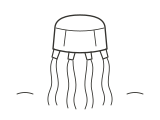
Current Record
most venomous (NOAA assessment)
Current record value
- Holder
- Australian box jellyfish
- Location
- —
- Start date
- —
- Record status
- VerifiedView verification details ↗Report an issue
Overview
Archive NoteChironex fleckeri occurs in tropical waters around northern Australia and the Indo-Pacific. Its tentacles contain dense nematocysts that inject venom into contacted tissue. Not all box jellyfish species are equally dangerous, so the record is specifically attributed to this species.
NOAA explicitly describes this Australian box jellyfish as the most venomous marine animal, warning of paralysis, cardiac arrest and sometimes death within minutes. Guinness's Most venomous jellyfish entry also describes some fatal cases occurring within four minutes without medical aid. Such cases must not be recast as a standardized world-record shortest time-to-death.
Modern medical reviews investigate pore-forming venom proteins and acute cardiovascular collapse, including possible hyperkalemia. Clinical severity depends on the contact area, dose and treatment, so a qualitative venomous-animal designation is more defensible than a single unverified fatal-time ranking.
Record history
1 Milestones- most venomous (NOAA assessment)Australian box jellyfishCurrent Record
Sources
Evidence & ReferencesVerification basis and limitations
VerifiedThe record conclusion has sufficient verification support.
Basis: direct confirmation by an authority
NOAA explicitly considers Chironex fleckeri the 'most venomous marine animal'; Guinness's Most venomous jellyfish listing agrees with the jellyfish ranking and discusses some deaths within four minutes. Clinical reviews confirm that life-threatening cardiovascular collapse can occur within minutes. No standardized across-species shortest fatal time metric was established.
Comparison boundaries still under review
This is an authoritative qualitative designation, not a globally standardized LD50 or shortest-fatal-time ranking. A reported fatal case within four minutes must not be generalized to all bites or species.
- Verification assessment
- 2026-11-06
- Last editorial review
- 2026-11-06
Current Entry identifies the current entry in this archive; it does not establish that the record is still held today.
The record value on this page is organized from the public sources above. Measurement methods may differ; JiLuDB follows the unified method described for each entry.
Public feedbackFound a data issue?If a fact has changed, the data is incorrect, or you know a more authoritative source, submit feedback.Submit feedback
Help keep the archive accurate
If a fact has changed, a value is incorrect, or you know a more authoritative source, leave a note. Feedback enters an administrator review workflow and never edits a record directly.