Record #00426Space archive
Tallest Lunar Mountain by Local Relief
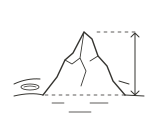
A 2025 study using NASA LRO LOLA elevation data identified an unnamed mountain near the South Pole–Aitken basin rim rising approximately 7,201–7,202 metres above its local base, the largest relief under that study's method.
ARCHIVE VISUAL / 01
NOT TO SCALE
Current Record
about7201metres
Current record value
- Location
- —
- Start date
- —
Overview
Archive NoteThe study analysed overlapping sectors of a global LOLA elevation model, reversing relief and applying a depression-filling algorithm to delineate mountains relative to local bases.
The topographic feature has a roughly three-sided form and is located in the South Pole–Aitken basin region. It is identified by a labelled position in the study's maps rather than a widely used formal mountain name. Its local relief is distinct from absolute lunar elevation or the height of the basin itself.
Record history
1 Milestones- about 7201 metresUnnamed mountain near the South Pole–Aitken basin rimCurrent Record
Sources
Evidence & ReferencesVerification basis and limitations
Evidence-backedCredible sources support core facts; the comparison scope or corroboration remains incomplete.
Basis: comparison of consistent primary data
The 2025 primary study reports 7,202 m in its results and 7,201 m in its conclusions for the same mountain, using a local-base LOLA terrain method. This entry adopts the conclusion figure; the difference is within one paper, not a conflict between independent studies.
Comparison boundaries still under review
Valid under the study's closed-mountain/local-base method; the paper uses both 7,201 and 7,202 m, and no independent global replication was established.
- Verification assessment
- 2026-11-07
- Last editorial review
- 2026-11-07
Current Entry identifies the current entry in this archive; it does not establish that the record is still held today.
The record value on this page is organized from the public sources above. Measurement methods may differ; JiLuDB follows the unified method described for each entry.
Public feedbackFound a data issue?If a fact has changed, the data is incorrect, or you know a more authoritative source, submit feedback.Submit feedback
Help keep the archive accurate
If a fact has changed, a value is incorrect, or you know a more authoritative source, leave a note. Feedback enters an administrator review workflow and never edits a record directly.